

This feature is only available on Chainloop’s platform paid plans.
Roles
Instance role
The Instance Admin role is only available in Enterprise Edition self-hosted (on-prem) deployments.
instance_admin_spec) or with SSO claims that map the reserved instance organization to the admin role.
Instance admins can:
- Create organizations, even when organization creation is restricted in the control plane.
- Invite members to any organization in the instance.
- List and create CAS backends in any organization.
- Create, list, and revoke instance-level API tokens, which carry the same instance-wide permissions. See Organization provisioning with API tokens.
- Being an instance admin does not grant access to organization content. When an instance admin operates on an organization where they hold no membership, the permissions above are all they get: reading projects, workflows, or attestations still requires an organization, product, or project role.
- Instance-level operations are reserved for instance admins. Organization Owners and Admins cannot perform them, despite having full access within their own organization.
On Chainloop-managed (SaaS) instances, the Instance Admin role is held only by Chainloop operators, who use it for instance administration
tasks such as billing account and identity provider management.
Organization roles
There are five organization level roles:- Organization Owner: It’s the highest privilege role, providing full access to all resources and features. It’s the role acquired by the creator of the organization.
- Organization Admin: It’s a management role in the organization, they have full access to the organization, its members and projects.
- Organization Viewer: It’s a read-only role that provides full visibility on the organization resources.
- Member: Members can create projects. They only have permissions in projects they create, or they have been added to with a Project Role. Members can manage projects but cannot manage organization resources.
- Contributor: Contributors can only contribute to projects they have been added to with a Project Role. Contributors cannot create projects and cannot manage organization resources.
(*) Members become Project Admins on the projects they create
Product roles
Product roles are used to manage user access at the product level, which is a collection of projects. There are two product roles:- Product Admin: Provides full access to the product, including managing projects, attaching compliance frameworks, and managing user access.
- Product Viewer: Provides read-only access to the product and its associated projects.
Project roles
Project roles are needed when the user has the Organization “Member” or “Contributor” role to define their access level to specific projects. There are two different project roles:- Project Admin: Provides full access to the project resources. For example, they can manage workflows, create project-scoped contracts, configure compliance frameworks, and user or group membership. They can also create project API tokens and perform attestations.
- Project Viewer: Provides read-only access to the project, workflows, and attestations.
Assigning product and project roles
You can list and manage members through products or project settings: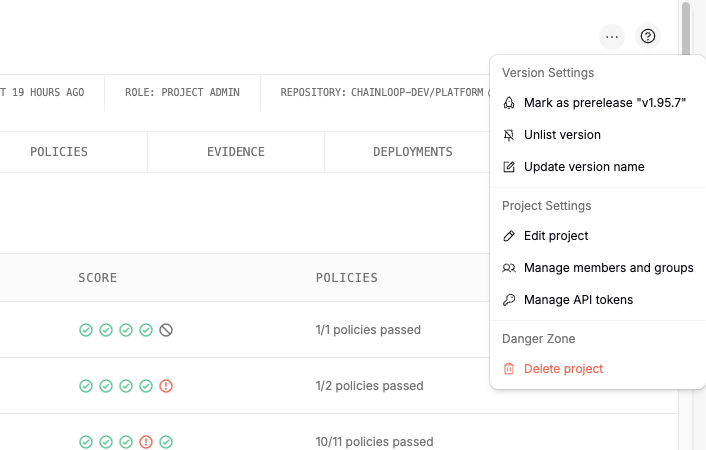
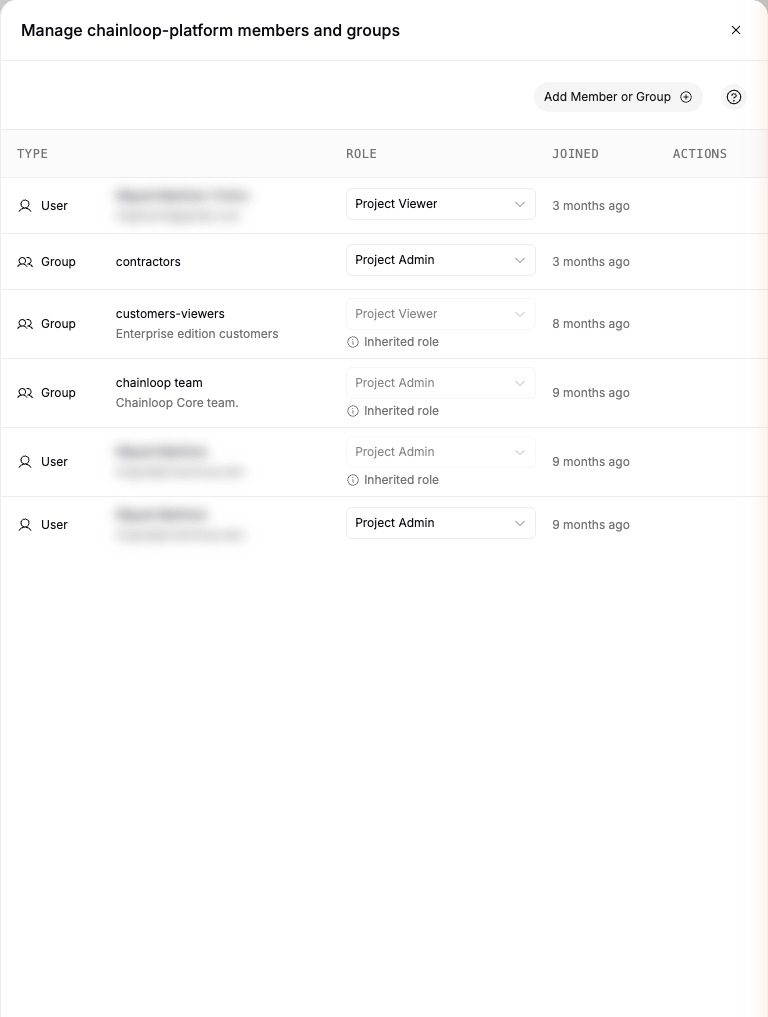
Groups
Groups can help in organizing users by Business Unit, Teams, Department, or any other criteria. They can be attached to projects with a given role. Users of the group would acquire that role when accessing the project.Creating groups
Only Organization Admins can create groups through the “Groups” section in Organization settings: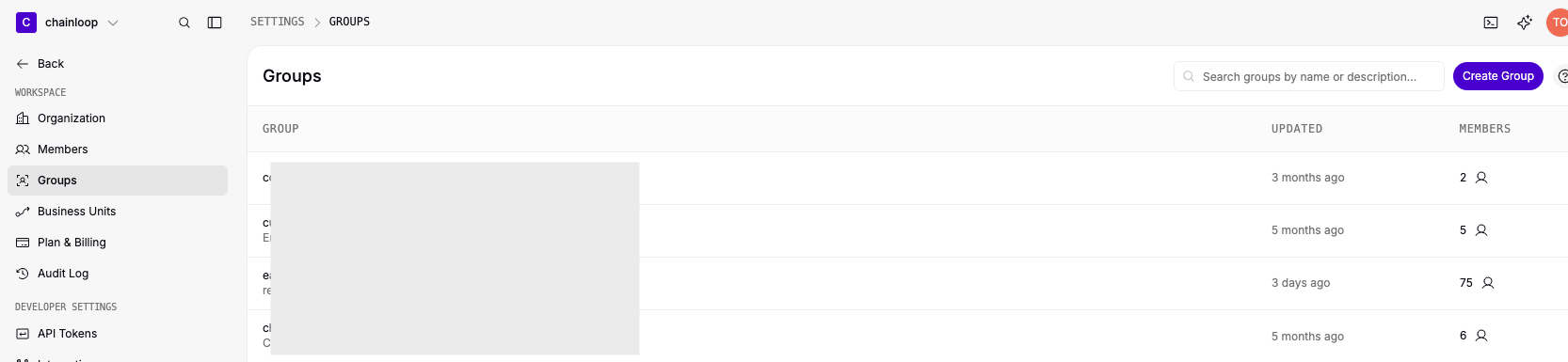
Adding users to a group
In Group Details view, Admins can add new members to an existing group by clicking the “Add Member” button: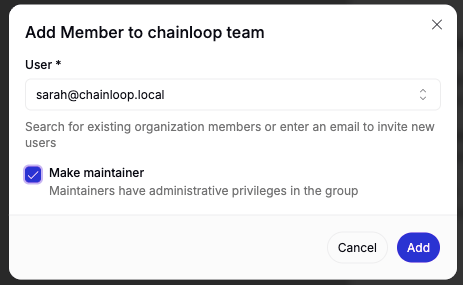
Project-scoped API tokens
Alongside org-level API tokens, project-scoped API tokens can now be created from the project settings: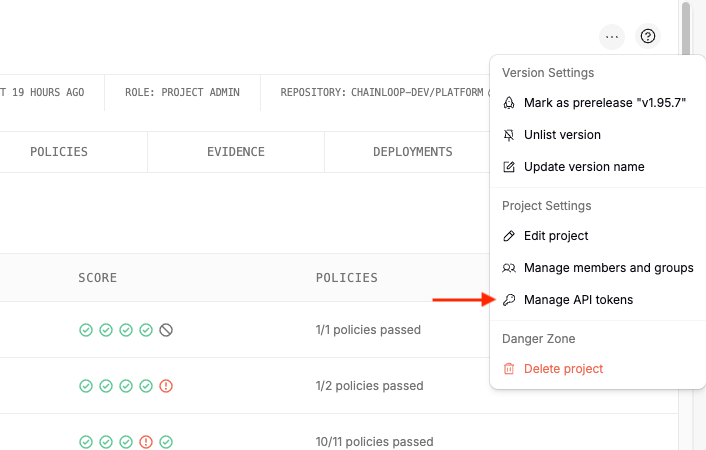
Summary of RBAC permissions
Here you can find a summary of all the permissions (Read, Read/Write) associated with each role and resource.Instance-level resources
These resources are only available to the Instance Admin role and to instance-level API tokens. They are not available to any organization, product, or project role.Org-level resources
Product/project level resources
(1) API tokens cannot be “read” since they are only available at creation time. But they can be listed.
(2) Product Admins become Project Admins in the projects associated with the product. So any project-scoped permission that requires Project Admin role, is also available to the Product Admin in the parent product.
(3) Depending on the configuration, new organizations could be created by any user, or only by the Instance Admin role
(4) Memberships are managed by org admins and owners. But any user can leave an organization at any point
(5) Group membership can ba also managed by “Group Maintainers”
(6) API tokens can create contracts only during the attestation process
(7) Instance-level API tokens are created by instance admins with
chainloop admin api-token create and carry the same instance-wide permissions
(8) Instance admins can list and create storage (CAS) backends in any organization. Updating or deleting an existing backend is an Org Admin operation in the organization that owns it
(9) Creation of new organizations. Deleting an organization remains reserved to its Org Owners